
Backflow is water running the wrong way, out of a property and back into the public supply. It can happen when pressure in the main drops, for example during a burst main or heavy firefighting demand, and it can draw in water from irrigation lines, spa pools, boilers or chemical dosing equipment. A backflow prevention device stops that, but only while its valves and seals are working.
Christchurch's drinking water comes from deep aquifers under the city and is pumped through more than 1,700 km of main pipes, so one contaminated connection can affect a lot of people. We test, repair and replace backflow devices for homes, cafés, salons, schools, workshops and apartment buildings across Christchurch, Selwyn and Waimakariri, and we handle the paperwork that goes with them.
Pricing: quotes are free, and every job gets a fixed price before we start, so there are no surprises on the invoice.
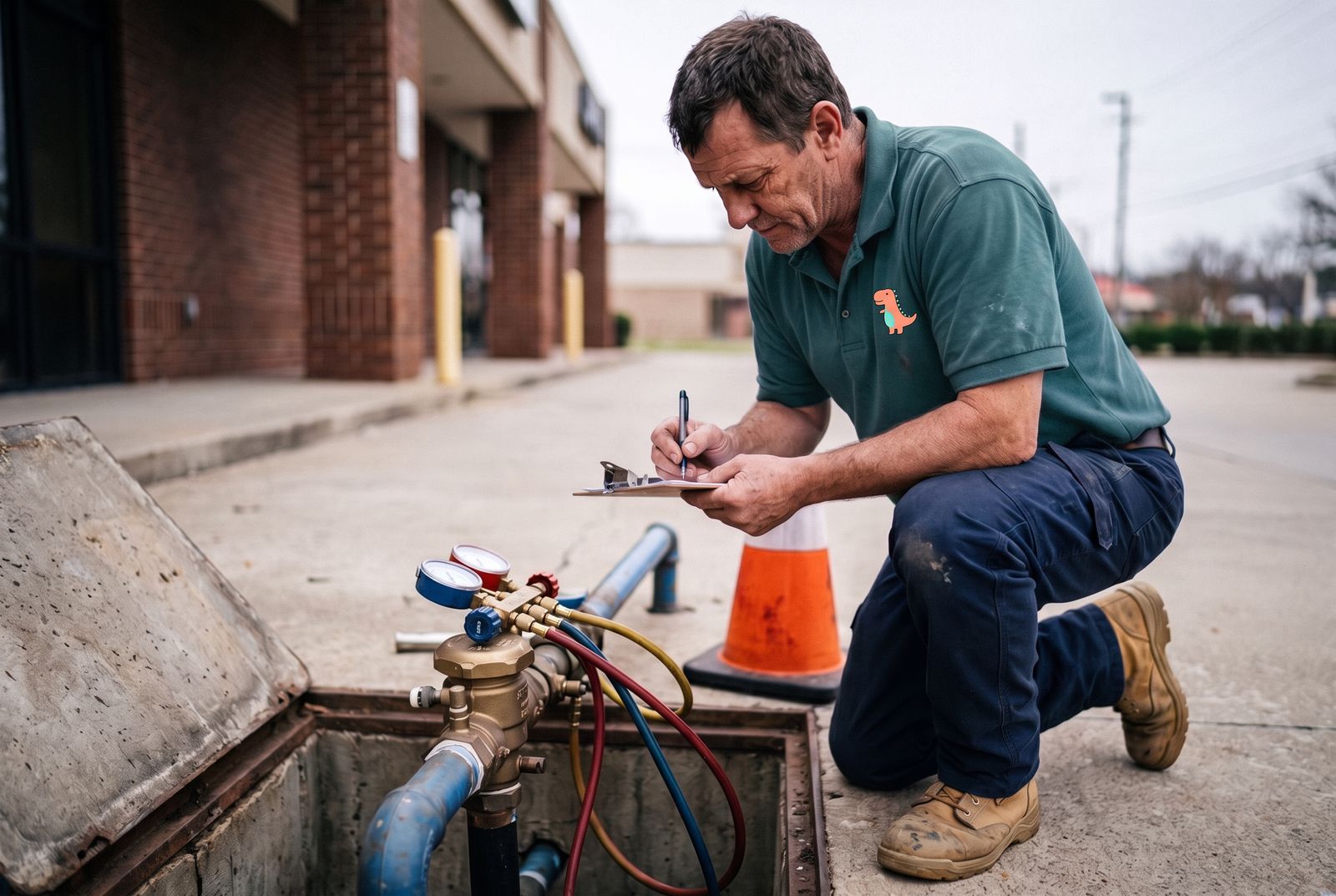
Backflow Testing Jobs We Handle Across Christchurch
- Annual backflow testing
- Backflow preventer installation
- Residential backflow preventers
- Commercial backflow devices
- Council test certificates
- Failed device repairs
Who needs a backflow device in Christchurch
Christchurch City Council requires every commercial and industrial property to have at least medium hazard backflow protection at the boundary as a condition of supply. Most houses do not need a boundary device. A home needs one only when there is a high or medium risk activity on site, and vacant land needs one only if water is used there, including for irrigation. You probably need a device, and an annual test, if any of these apply:
- A swimming pool or spa pool is filled from the mains
- There is an irrigation system with underground controllers
- A hairdressing business runs from the property
- The site is commercial or industrial, such as a café, workshop or factory
- Your building has a compliance schedule and a building warrant of fitness
- You have had a letter from the council about backflow at your address
Boundary devices and internal protection
In Christchurch the boundary device goes on the private side of the boundary, and the property owner pays for the device, its installation, its testing and its maintenance. That is different from some other cities, where the water supplier fits the boundary device. Installing one needs a building consent, and the council offers a streamlined consent at a published fixed fee of $600 including GST, which it notes may not cover every cost. If an owner does not install a required device, the council can install it and charge the owner.
Protection inside the building is a separate requirement. Zone and individual protection on things like boilers, dosing units and lab sinks is covered by Building Code clause G12, and testable devices usually appear on the building's compliance schedule. Many sites need both, and we handle them alongside the rest of our commercial plumbing work.
How It Works
Device types and hazard ratings
The device you need depends on how much risk the activity on site poses to the public supply. As a general guide:
- High hazard, such as chemical handling or medical sites: a reduced pressure zone (RPZ) device
- Medium hazard, such as irrigation, pools and most commercial premises: a double check valve or better
- Low hazard, which covers most private homes: an air gap or a hose connection vacuum breaker, often with no testable device at all
Annual testing, failed tests and repairs
Testable devices must be tested every year, and again after any repair, by an Independent Qualified Person (IQP). The result goes on the building warrant of fitness paperwork where the device is on a compliance schedule. Rubber seals and check valves wear over time, and grit from the mains can stop a valve seating, so a failed test is common and nothing to panic about.
When a device fails we tell you on the spot, explain why, and give you a fixed price to service or replace it. Most valves can be rebuilt with a parts kit on the same visit and retested straight away, so you are not waiting on a second booking.
What affects the cost
Your total depends on:
- How many devices are on site, including any on irrigation or fire supplies
- Device type: an RPZ takes longer to test than a double check valve
- Access, such as devices in locked plant rooms or deep boxes
- Any parts kits, repairs or replacements needed after a failed test
Rural supplies, Selwyn and Waimakariri
Outside the city the rules come from the district council for your address. On Waimakariri District Council's restricted rural supplies, where water trickles through a restrictor into a property tank, backflow prevention at the boundary is required for farming or any other non-domestic use. Lifestyle blocks around Rangiora and Kaiapoi with stock troughs or irrigation often fall into that group. Selwyn properties in Rolleston and Lincoln deal with Selwyn District Council.
Whichever council it is, we keep a record of every device we test, with location, serial number, results and parts used, and we contact you before the next annual test is due. For landlords and body corporates, that register covers every site they look after, which is a large part of our property manager plumbing service.
Why Choose Cheeky's Plumbers for Backflow Testing
Same-visit repairs and retests
When a device fails, most valves can be rebuilt with a parts kit and retested on the same visit, so the paperwork is not held up by a second booking.
Paperwork that reaches the right place
You get the test record your building warrant of fitness needs, with the IQP documentation completed and copies kept on file.
A register with reminders
We keep a record of every device we test, with location, serial number, results, photos and parts used, and contact you before next year's test is due.
Fixed price for any fix
If a device needs servicing or replacing, you get a fixed price before we start.
Backflow Testing FAQs
How often does a backflow device need testing?
Every year, and again after any repair. Christchurch City Council requires testable devices to be tested annually by an Independent Qualified Person.
Who pays for the boundary device in Christchurch?
The property owner. The device goes on the private side of the boundary, and the owner pays for installation, the annual test and any maintenance.
Does my house need a backflow device?
Most houses do not. A home needs a boundary device only for higher risk activities such as a swimming or spa pool, irrigation with underground controllers or a hairdressing business.
What is an IQP?
An Independent Qualified Person, accepted by the council to inspect and test specified systems such as backflow devices for building warrants of fitness.
Do I need a consent to install a backflow device?
Yes, a building consent is needed. Christchurch City Council offers a streamlined consent for boundary devices at a published fixed fee, and we can handle the application.
What happens if I ignore the requirement?
If a required device is not installed, the council can install one and recover the cost from the owner. For devices on a compliance schedule, a missing test can also hold up your building warrant of fitness.
Backflow Testing Across Christchurch
Our backflow testing team works in every Christchurch suburb. Find your local plumbers:
Backflow Testing Guides
Related Services
Emergency Plumber
Water through the ceiling at 2am does not wait for business hours, and neither do we.
View serviceLeak Detection
A hidden leak can push your household over the Christchurch excess water allowance and quietly rot framing behind your walls.
View serviceBurst Pipes
Burst pipes cause more water damage in Christchurch homes than almost anything else, from frozen pipes on a hard frost to older bungalows with galvanised steel or early polybutylene pipe.
View serviceRepiping
Old galvanised steel and grey polybutylene pipes fail with age.
View serviceBlocked Drains
Blocked sinks, showers, toilets and gully traps cleared fast.
View serviceHot Water Cylinders
Hot water cylinder replacement across Christchurch.
View serviceSee all plumbing services or every service we offer.