

Rainwater tanks do two very different jobs around Christchurch. In town, they take pressure off the council supply for gardens, toilets and laundry, and help through dry summers. On Banks Peninsula and rural properties on a restricted supply, a tank is part of how the house gets water at all, and it has to be reliable and safe. We supply and install water tanks across Christchurch: we help you pick the size and material, set the base, and plumb in the pump, first-flush diverter, filters and overflow so the tank works from day one.
We handle both. That covers sizing and placement, connecting to spouting and downpipes, pressure pumps, first-flush diverters, filtration and UV, frost protection, and any mains top-up with the backflow protection it needs.
Pricing: quotes are free, and every job gets a fixed price before we start, so there are no surprises on the invoice.
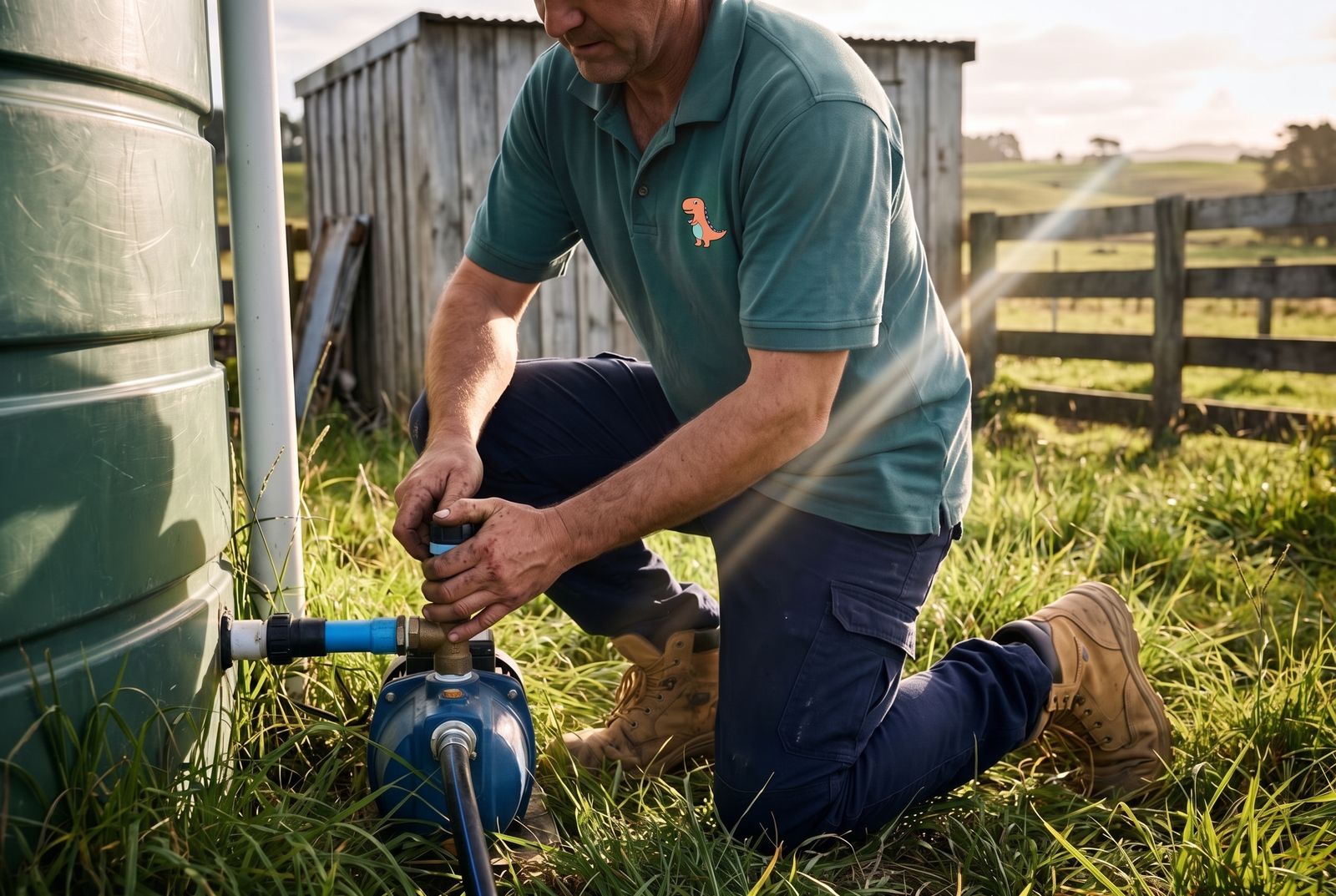
Water Tanks Jobs We Handle Across Christchurch
- Rainwater tank installation
- Tank pump setups
- First flush diverters
- Tank top-up valves
- UV for tank water
- Leaking tank repairs
Why a tank makes sense in Canterbury
Christchurch is dry by New Zealand standards, with about 618 mm of rain a year at the airport, and hot nor'westers can dry a garden out fast. The city has had summer water restrictions before, including alternate-day sprinkler use and, at times, hand-held hoses only. A tank for garden use and irrigation keeps the vegetables going when the hose rules tighten.
In Selwyn, households on council supplies pay for every cubic metre, so water from a tank saves money straight away. In Christchurch most households pay extra only above a daily allowance, so a tank mostly helps big gardens stay under it. On Banks Peninsula, supplies at Birdlings Flat, Little River, Pigeon Bay and Wainui are restricted: each property needs its own storage tank and use is limited to 1,000 litres a day. Waimakariri's rural restricted supplies work the same way, with water trickling through a restrictor into a property tank.
Consent and the plumbing rules
A simple tank for outdoor use may not need a building consent, but the conditions are specific, and tanks on stands have their own limits. Once a tank feeds toilets, the laundry or the kitchen, or has a mains top-up, consent is normally needed and the plumbing must be done by a licensed plumber. Christchurch City Council, Selwyn District Council and Waimakariri District Council each run their own consents, so we check your plan with the right one before you buy anything.
Any link between a tank and the council supply needs backflow protection under Building Code clause G12, so tank water can never be drawn back into the public main. Where a testable device is needed, it is tested every year, and our backflow testing team can look after that.
How It Works
Getting the size right
Tank size depends on the roof area feeding it, how much water you plan to use, and how long you need to last through a dry spell. A small tank on a big roof overflows in every storm and still runs dry in February.
On town sections using tank water for the garden and toilets, the limit is often space down the side of the house. On rural and Banks Peninsula properties relying on the tank, we size for late summer, when rain drops away and garden use climbs, and look at whether a second tank makes sense. A full tank weighs about a tonne for every 1,000 litres, so on soft or quake-affected ground the base has to be properly prepared so the tank does not settle or tilt.
Keeping tank water clean
Roof water picks up leaves, bird droppings and dust, and sediment settles on the tank floor over time, so tanks used for drinking need periodic water tank cleaning as well as treatment. Taumata Arowai's acceptable solution for roof water supplies sets out what a safe system looks like. Treatment, from the first-flush diverter through to filtration and UV, works best as a sequence:
- Leaf diverters or mesh on the downpipes to keep debris out
- A first-flush diverter to dump the dirtiest water at the start of each rain
- Tank and pipe materials suitable for drinking water
- Sediment and carbon filtration after the pump
- UV disinfection where the water is used for drinking
Frost, pumps and overflow
Christchurch averages about 80 ground frost days a year, and tank systems have plenty of exposed pipe: the outlet, the pump and its pressure fittings, and the line to the house. A frozen pump can crack its housing and a split pipe can empty a tank overnight. We fit pumps in an insulated cover or housing, lag exposed pipe, and fit drain points so the system can be protected through a cold snap. Rural tanks feeding stock troughs need the same attention.
Overflow needs somewhere to go. We connect it to the stormwater system or a suitable soakage area so it does not end up under the house, which matters on flat sections where the ground is already wet in winter.
What affects the cost
Every tank project gets a free quote, because sites vary so much. The main factors are:
- Tank size, material and whether it sits on the ground or a stand
- Distance from downpipes and the house, and any trenching
- Outdoor taps only, or a connection to internal plumbing
- Pump, pressure tank, filtration, UV and frost protection
- Consent, a mains top-up valve and backflow protection where required
Why Choose Cheeky's Plumbers for Water Tanks
Consent checked before you buy
We check your plan against the building consent rules with the right council before you order a tank, and licensed plumbers do any connection to internal plumbing.
Built for frosty winters
Pumps are housed, exposed pipe is lagged and drain points are fitted, so a hard frost does not crack the pump or empty the tank.
Tank, pump and plumbing together
The same team connects the downpipes, overflow, pump and any mains top-up with backflow protection, so you are not coordinating separate trades.
Price agreed before work starts
Every tank job gets a free site quote and a fixed price before anything is dug or ordered.
Water Tanks FAQs
Do I need consent for a rainwater tank in Christchurch?
Not always. A simple outdoor-use tank may be exempt, but one connected to internal plumbing or with a mains top-up normally needs consent. We check with the right council first.
Can I drink rainwater from my tank?
It can be made safe with good roof and tank maintenance, a first-flush diverter, filtration and UV treatment.
Can a tank supply my toilets and washing machine?
Yes. That needs a pump and usually a building consent, and the plumbing must be done by a licensed plumber.
How do I stop my tank pump freezing?
House the pump in an insulated cover, lag the exposed pipe and fit drain points. In a hard frost, a pump left exposed can crack.
Do I need backflow protection if my tank has a mains top-up?
Yes. Any connection between a tank and the council supply needs backflow protection so tank water cannot flow back into the main.
I am on a restricted supply. Can you work on my tank?
Yes, on the private side: the tank, pump and pipes to the house. Do not alter the council's restrictor, which is chargeable.
Water Tanks Near You
Find your suburb for local water tanks information, response times and nearby areas.
Related Services
Water Filtration
Whole-house and under-sink filtration for cleaner, better-tasting water.
View serviceWater Pumps
Pressure pumps, tank pumps, bore pumps and sump pumps supplied, installed and repaired.
View servicePressure Reducing Valves
Mains pressure in some streets can be high enough to damage tapware, burst flexi hoses and wear out cylinders early.
View serviceIrrigation
Drip lines, sprinklers and smart controllers designed for your section and plumbed in by licensed plumbers, with the backflow protection Christchurch City Council requires for irrigation with underground controllers.
View serviceBlocked Drains
Blocked sinks, showers, toilets and gully traps cleared fast.
View serviceHot Water Cylinders
Hot water cylinder replacement across Christchurch.
View serviceSources and further reading
- Wikipedia: Christchurch climate (rainfall and frost days)
- Christchurch City Council: water restrictions lifted
- Christchurch City Council: where our water comes from (restricted supplies)
- Waimakariri District Council: living with a restricted water supply
- Selwyn District Council: your water charges
- Taumata Arowai: acceptable solution for roof water supplies
- BRANZ: collecting drinking water from roofs