

Water pressure that is too high does its damage quietly. Pipes bang when a tap shuts, flexi hoses bulge, the cylinder relief valve drips, and tap cartridges wear out years early. A pressure reducing valve, or PRV, sits on your supply pipe and holds the pressure inside the house at a steady, safe level, whatever the network is doing outside.
Cheeky's Plumbers measures, fits, replaces and resets pressure reducing valves across Christchurch, Selwyn and Waimakariri. We measure first, so you only get a valve if you need one.
Pricing: quotes are free, and every job gets a fixed price before we start, so there are no surprises on the invoice.
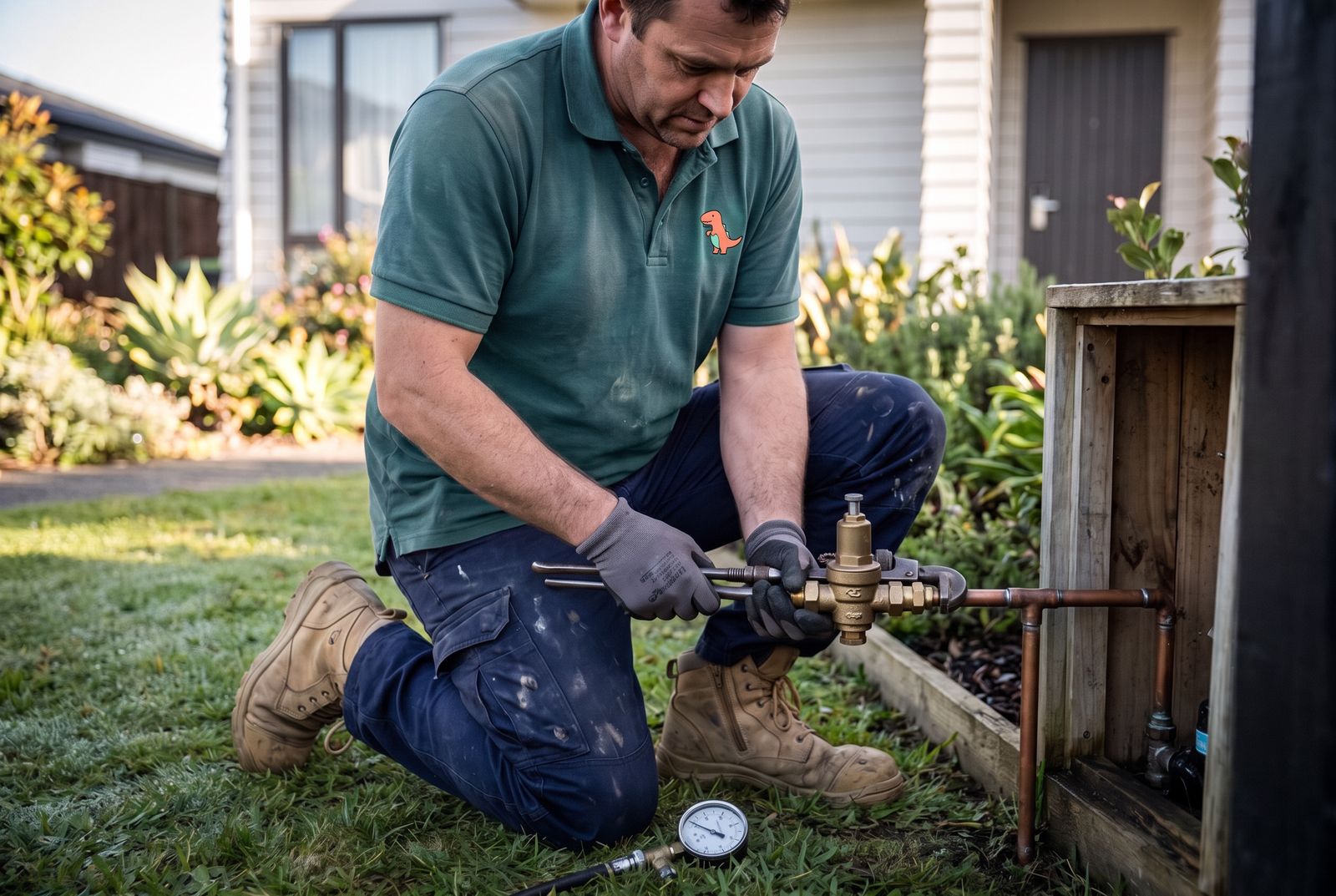
Pressure Reducing Valves Jobs We Handle Across Christchurch
- Pressure reducing valve installation
- PRV replacement
- High mains pressure fixes
- Water hammer
- Pressure testing
- Flexi hose protection
Signs your pressure is too high
High pressure rarely shows itself directly, though water hammer is a common clue. Look for:
- Banging or shuddering pipes when a tap or appliance shuts off
- Flexi hoses bulging, kinking or failing early
- A cylinder relief or expansion valve dripping constantly
- Tap cartridges and toilet inlet valves wearing out quickly
- Showers that are harsh and splash out of the tray
- Leaks coming back at joints that were recently repaired
What the rules say about pressure
Water supply in New Zealand homes falls under Building Code clause G12, with AS/NZS 3500.1 commonly used as the technical standard. AS/NZS 3500.1 limits static pressure at outlets inside a building, other than fire service outlets, to 500 kPa. Many tapware and appliance makers also set maximum inlet pressures in their instructions, and running above them can affect warranties.
MBIE has issued a product recognition notice covering WaterMark-certified inlet pressure control valves, which gives a recognised route for compliant valves. We only fit valves approved for use on New Zealand drinking water supplies.
How It Works
Christchurch pressure, from the plains to the hills
Christchurch's water comes from deep aquifer wells and is pumped into more than 1,700 km of main pipes, with electric pumps run from a central control room. Christchurch City Council says hill suburbs are fed from reservoirs or tanks to keep pressure steady. Pressure at your boundary depends on where you sit in that network, so a home up on the Cashmere hills and one on the flat in Beckenham can see different readings.
Pressure can also change over time as the network is upgraded, and a house that never needed a valve when it was built may need one now. Outside the city, some rural properties in Selwyn and Waimakariri are on restricted supplies that fill a tank on site, and those homes rely on a pump for pressure instead. If that is you, the answer may be a better pump or pressure tank rather than a PRV.
How we fit and set a valve
We start by measuring the static pressure at the boundary, ideally with a gauge that records the peak, because pressure often climbs overnight when demand is low. If it is higher than your home should see, we fit a pressure reducing valve on the supply pipe just inside your boundary, with an isolation valve and a strainer to protect it.
The valve is set to suit your fixtures and cylinder, usually well below the 500 kPa limit. Then we check the cylinder valves, relief valve and any expansion control valve, because they all interact with the new setting. In Christchurch we also lag any valve and pipe fitted outside or in an unheated space, because Master Plumbers warns that freezing can split pipes and fittings, and a frozen valve body is an expensive way to find that out.
Valves wear out too
A PRV is not fit and forget. Seats and diaphragms wear, debris lodges in the valve, and a failing valve may let pressure creep up overnight while reading normally during the day. If your relief valve has started dripping or your hoses keep failing, test the existing valve before replacing anything else. Low water pressure is just as common a complaint, and a valve that has stuck partly closed is one cause we check for.
What affects the cost
Pressure reducing valves are fitted. The total depends on:
- Pipe size and material at the installation point
- Valve type, and whether a strainer and isolation valve are needed
- Access near the boundary or where the supply enters the house
- Replacing a failed valve versus a new installation
- Related work such as cylinder valves, flexi hoses or frost lagging
Why Choose Cheeky's Plumbers for Pressure Reducing Valves
Peak pressure measured
We record the highest pressure your home sees, including overnight, before recommending a valve.
Approved valves only
Every valve we fit is approved for New Zealand drinking water supplies and suits your pipe size.
Set to suit your fixtures
The setting protects your tapware and cylinder while keeping a good shower.
Lagged against frost
Valves and pipe in exposed spots are insulated so a hard Christchurch frost does not split them.
Fixed price before we start
You know the full cost, including any related valve or hose work, before we begin.
Pressure Reducing Valves FAQs
What water pressure is too high?
AS/NZS 3500.1 limits static pressure at outlets inside a building to 500 kPa. Many tapware and appliance makers set lower maximums, so we set the valve to suit your fittings.
Will a pressure reducing valve weaken my shower?
Not if it is set properly. The aim is a steady, comfortable pressure that protects your fittings, not a weak one.
How do I know if my pressure is high?
Banging pipes, a dripping relief valve, bulging hoses and taps that wear out early are common signs. A gauge reading at the boundary confirms it.
Do pressure reducing valves wear out?
Yes. Seats and diaphragms wear and debris can lodge in the valve. A failing valve can let pressure creep up overnight.
Can my PRV freeze in winter?
A valve outside or in an unheated space can freeze on a hard frost. We lag exposed valves and pipe as part of the install.
Do I need a valve if I already have one on the cylinder?
Possibly. A cylinder valve protects the hot side only. A valve on the main supply protects every tap, hose and appliance in the house.
Pressure Reducing Valves Across Christchurch
Our pressure reducing valves team works in every Christchurch suburb. Find your local plumbers:
Related Services
Water Filtration
Whole-house and under-sink filtration for cleaner, better-tasting water.
View serviceWater Tanks
Rainwater tank installation, pump setup and maintenance for rural and urban properties across Christchurch, Selwyn and Waimakariri.
View serviceWater Pumps
Pressure pumps, tank pumps, bore pumps and sump pumps supplied, installed and repaired.
View serviceIrrigation
Drip lines, sprinklers and smart controllers designed for your section and plumbed in by licensed plumbers, with the backflow protection Christchurch City Council requires for irrigation with underground controllers.
View serviceBlocked Drains
Blocked sinks, showers, toilets and gully traps cleared fast.
View serviceHot Water Cylinders
Hot water cylinder replacement across Christchurch.
View serviceSources and further reading
- Christchurch City Council: Where our water comes from
- Victorian Building Authority: AS/NZS 3500.1 clause 3.3.4, 500 kPa limit
- MBIE: product recognition notice RN-10054, inlet pressure control valves
- Building Performance: G12 Water supplies
- Waimakariri District Council: Living with a restricted water supply
- Master Plumbers: Avoid frozen pipes this winter